Your basket
Subtotal
£0.00
×

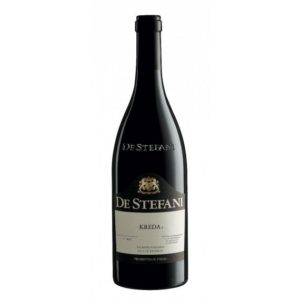
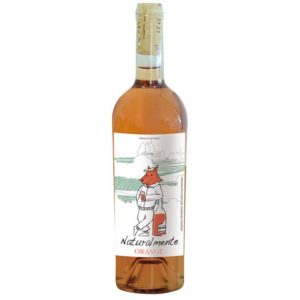
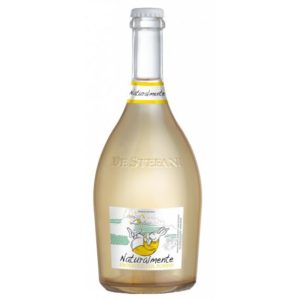
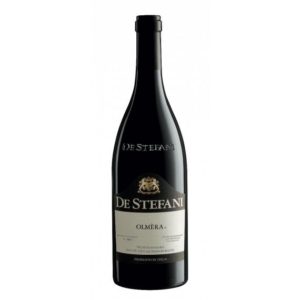
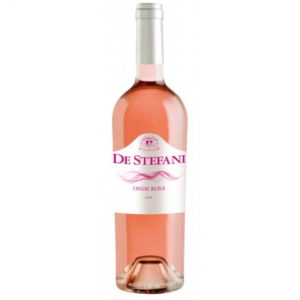
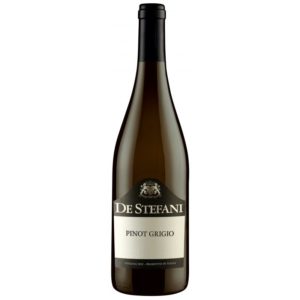
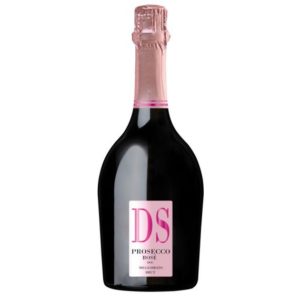
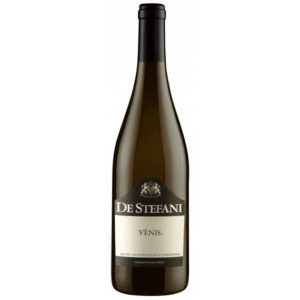
De Stefani

Wine region: Veneto
Area: Fossalta Di Piave (Venezia)
Square: 60 He
Quantity: 500 000 bottles
Owner: Famiglia De Stefani
Agronomist: Walter Biasi
Enologist: Tiziano e Alessandro De Stefani
Wine type: sparkling, white, rose, red, sweet
Grape: Chardonnay, Glera, Merlot, Pinot Blanc, Pinot Grigio, Raboso, Refosco, Sauvignon, Marzemino, Tocai

The De Stefani family originates in Refrontolo, a little hilly village in Veneto Italy. As results in official documents of 1624. In the second half of 1800 Valeriano De Stefani, the founder, individualized the best soil where to produce wines of rare indigenous territorial personality “thanks to the Caranto soil”, as is the Colvendrame estate in Refrontolo, on the hills between Conegliano and Valdobbiadene, north of Venice, a UNESCO World Heritage site.

Today Alessandro De Stefani ” fourth generation” follows his father Tiziano in producing wines that follows a very natural philosophy of sustainability by maintaining and preserving the growth of old healthy vines, planted by choice in very high-density vineyards, without the use of chemicals or animal products, and using only indigenous yeasts without additional sulphites in the process of making their wines, turning native varieties into a better expression of themselves.

Wines from this Winery

Browse All Wines From This Winery

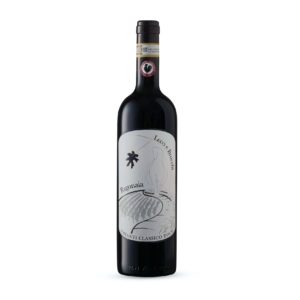
Lecci e Brocchi

Wine region: Tuscany
Area: Castelnuovo Berardenga (Siena)
Square: 10 He
Quantity: 25 000 bottles
Owner: Sabrina Lastrucci e Vittoria Baldi
Agronomist: Fabio Burroni
Enologist: Luano Bensi
Wine type: red
Grape: Sangiovese

“Lecci e Brocchi is a family business where wine is a passion that the father “Il Chiorba” has handed down to his daughter “Luciana” and grandson “Giovanni.” They are based in the south of Chianti Classico, at Villa A Sesta, where their vineyard enjoys a unique soil “galestro” whose volcanic mineral properties give the wines a special scents and taste that reflects the unique style of the terroir. The first bottle came out in August 2012 reflecting an authentic and traditional interpretation that, in its essence, encourages the truest expression of the Chianti Classico that goes beyond the modern style of wines enriched via the use of wood or international variety vines. Their characterful expression has immediately found an audience that knows how to appreciate the different offerings that the Tuscan Terroir offers. Since 2019 they have become fully organic.

Wines from this Winery

Browse All Wines From This Winery

Poggio alla Meta

Wine region: Lazio
Area: Casalvieri (Frosinone)
Square: 16 He
Quantity: 70 000 bottles
Owner: Famiglia Nicòtina
Agronomist: Mariano Nicòtina
Enologist: Mariano Nicòtina & Andrea Nicòtina
Wine type: white, red
Grape: Merlot, Moscato di Terracina, Passerina, Cabernet Sauvignon, Lecinaro, Maturano Knowledge, experience, research, willpower and high quality are the cornerstones of Poggio alla Meta, an organic and biodynamic winery founded and managed by prof. Mariano Nicòtina. The winery acts with rigor and scientific methods, always in accordance with the dictates of eco-friendly viticulture, always trying to propose what nature creates in the simplest (possible) way.
Poggio alla Meta is located in lower Lazio on the border with the National Park of Abruzzo, Lazio and Molise, surrounded by Monti della Meta, hence the company name.
The cellar was designed with advanced methodologies that exploit the cold and the force of gravity, allowing for gravity processing and limiting the use of mechanical pumps for lifting the masses. The use of wood is limited to the maximum and is applied only to those wines to which greater oxygenation is desired and which, due to their structure, are suitable for slow evolution.

Wines from this Winery

Browse All Wines From This Winery

‘The black tear’ Lacrima d Morro d’Alba Marche Velenosi

Lacrima di Morro d’Alba (‘the black tear’ when translated from Italian) has its cradle in Morro d’Alba and in a few neighbouring municipalities located on the hills behind Senigallia in Marche wine region. Less than three hundred hectares of specialized vineyards are planted here by Velenosi winery for three types of grapes: Lacrima di Morro d’Alba, the younger, fresh and floral version; Lacrima di Morro d’Alba Superiore, with greater structure and the presence of more pronounced fruity sensations; Lacrima di Morro d’Alba Passito, a sweet wine obtained by natural drying on the plant or in the drying room of the grapes themselves.

To understand the evocative name given to the black grape variety originating from Morro d’Alba, it is necessary to go to the vineyard during the harvest period. You will notice that here and there the thick peel of the grape tends to split, leaving drops of must percolate. This typical “weep” suggested the name. Not an easy agronomic temperament, however.

A little because of the fact that the must attracts insects of all kinds, and a little because the plant is generally not very apt to withstand climatic adversities. To manage it in the best possible way, careful and expert viticulture is required, able to check that the sugary maturation of the must meets that of the grape seeds, that is to say that of the tannins.

Harvesting generally takes place around mid-September. Adequately ripe grapes will give access to the typical semi-aromatic character of the vine which gives the typical floral scents of violet and rose, with an unmistakable tonality.

The vinification almost always takes place in steel to preserve the intense and fragrant olfactory character. The robust tannic content present in particular in the Superior type, however, allows an unexpected longevity and still little explored in its evolutionary potential. Wood is generally still rarely used, except for the dessert Passito wine.

The vine is also widespread outside its natural bed of Morro d’Alba as cultivation is allowed throughout the Marche region (as well as in Umbria and Puglia) but is rarely used in purity: a little bit is enough in the blend to transfer captivating olfactory sensations to aromatically more neutral red vines.

Enjoy Lacrima di Morro d’Alba as a delicious dry red wine Lacrima di Morro d’Alba and as a dessert cherry passito Visciole.

Link to the original article from Velenosi winery website.

Habemus: genesis of a Lazio excellence

For the 5thconsecutive year Habemus San Giovenale is confirmed one of Top 100 Italian Reds by Gentleman magazine. This result represents 6 most important Italian wine ratings.

Emanuele Pangrazi, a Roman entrepreneur, at the age of 25 decided to buy a piece of land where he could build his house in the countryside to escape from weekly stress and spend family time. He always called it “my little paradise”, the place where talking on the phone with friends he could say “we are under the same sky … here on summer nights you can touch the stars”.

The first idea was to produce olive oil. However, a meeting with a local agronomist, who advises against producing oil due to the lack of consistency of yield over the years, makes Emanuele change his mind and gives him a revolutionary idea for that area: wine.

The meeting with Marco Casolanetti (wine maker of ‘Kurni’ Oasi degli Angeli) was the missing piece. Marco presented the vision of what that territory could offer which, in some respects, recalls the Rhone Valley. Hence the idea of ​​planting the vines grown on the other side of the Mediterranean: Grenache, Carignane and Syrah to create a typical Rhodanese blend.

THE VINEYARD OF HABEMUS

The territory of 53 ha, 15 of which are vineyards, nestled between the Sabatini Mountains to the south and the Cimini Mountains to the north, on top of the Mignone Valley.

Soil is predominantly clayey and enjoys strong sunshine and little rainfall. To these two factors is added a constant ventilation coming from the sea. Cold winter air heats up, going up the valley, and allows the grapes to germinate earlier than in the coastal areas. While in the summer the exact opposite happens: hot air, traveling through the valley during the night, cools down, leading to temperature variations that even reach 20 ° C.

The company is certified organic: “But we don’t stop there: in fact, we have an even more extreme approach: we use products based on propolis, garlic and algae and only spring water.” In the vineyard, therefore, respect for the plant and the product is pursued with “good practice and natural agricultural practices of 60 years ago”. “Producing less to bring more quality” is a concept to which San Giovenale is firmly linked.

Planting density in the vineyard is very high: 11,000 vines with very low yields of 25 quintals per hectare for the red grape varieties (12 quintals per hectare for Cabernet Franc), while for the Marsanne and Roussanne vineyard it reaches up to 40,000 plants per hectare.

“The quantity of grapes must allow you to produce the best possible wine of the vintage, because the wine must always be the product of the vintage, in all vintages. For example, 2015 is the perfect vintage, but I am less attached to it: I am more attached, instead, to 2014 and 2017, where I have been battling with the cold and with the heat: in one year plants were unable to mature, while in the other there was no water supply ”.

Habemus’ production currently stands at 9000 bottles for the white label, and 1000/1200 bottles for the red label Cabernet Franc. For the Bianco da Marsanne and Roussanne “we are producing a barrique a year with the project for the next few years to produce a maximum of 2000 bottles”.

THE CELLAR

The structure is based on the concept of eco-sustainability: completed in 2012 and designed by architect Michela Esposito, it is zero-impact with a photovoltaic and geothermal system that makes it autonomous from an energy point of view. “Photovoltaics, geothermal energy, the green roofs that cover the barrel cellar, the walls and ventilated roofs allow me to conserve energy so as not to resort to fossil fuels.”

In the production of Habemus, the de-stemmed grapes macerate for two weeks in Lejeune steel containers, which guarantee the most advanced technology. Fermentation is triggered by indigenous yeasts. At the end of the process, the wine passes into new barriques where it stays for 20 months (30 months for the red label Cabernet Franc). After bottling, which takes place without filtration, the wine rests in the cellar for six months.

“We had a recipe book at home, and, with my girls, we had titled it” virtual trattoria del Piccolo Paradiso “: this is my place, I created San Giovenale to thank him and the name was not accidental. I could call it in any way, the choice of the name is a thank you to this place: it put me to the test and brought out things about me that I didn’t expect, I felt the sense of the challenge and, from this point of view, I like it I think that San Giovenale will outlive me”.

TASTING NOTES

Habemus 2018

Intense, dark, impenetrable ruby ​​red. The nose is extremely complex, rich and persuasive: it opens with floral notes and small red fruits, and then turns to balsamic and eucalyptus notes. But we are only at the beginning and, for those like me who love good wine, it will not be difficult to practice the art of waiting. I leave it in the glass before moving on to tasting. Here the nose changes: spices are the masters, cinnamon and black pepper that open to hints of candied orange peel, plum, blackberry jam, cocoa. On the palate, with its 15°, it is powerful, but very dynamic: the entrance is rich, the tannin vibrant and sweet, the alcohol perfectly integrated. The strong reference to jam is striking, leaving room for a balsamic and refreshing trail on the finish. The combination of extract and acidity is perfect.

To drink immediately to enjoy its exuberance or to let it rest for a few years to enjoy its richness.

The article is translated from the original article by Alessio Bricoli.

Valentine’s food and wine pairings

These are some food and wine pairing ideas easy to arrange at home to make this Valentine’s special.

Obviously, nothing can beat a traditional and always romantic cheese & charcuterie platter!
Start with a glass of Franciacorta paired with Prosciutto crudo. Continue with a selection of cheeses accompanied by structured smooth White (choose a Dessert White wine with blue cheese). Proceed with charcuterie or salami with your favourite Reds!

If you plan a more sophisticated dinner, these ideas might interest you:

Oysters
Pair with Franciacorta or Soave Prawns/shrimps
A sparkling Rose or white Riesling to serve with a classic prawn cocktail Smoked salmon
Franciacorta or Italian Traditional method sparkling wine Truffle or mushroom risotto
A smooth structured white wine will create a delicious combination: Trebbiano Spoletino or Chardonnay Collio from Friuli Lasagna or spaghetti with tomato sauce
Go for a medium body red wine: Sangiovese or Montepulciano d’Abruzzo with work well White fish or lobster
An easy match with any White wine to your likes or continue with Franciacorta throughout the main! Red fish
Flexibility to choose light or smooth red wine like Pinot Noir, Bardolino or Merlot Steak
Definitely a full body red: elegant Nebbiolo for a lean fillet or a more robust flavoured wines like Aglianico or Sagrantino for a ribeye Strawberries
Prosecco Rose or Franciacorta Chocolate dessert
We have a great pairing wine – Vero Amore (‘real love’) Passito from Sangiovese grape from Umbria!


What is the best age for the wine?

Over time you will notice that changes will take place with wine. Some wines will improve with age, but most wines do not and were intended to be enjoyed when fresh and young. It is perhaps confusing for the general public, with some wines getting better with age and others becoming less drinkable. In this article, we will try to explain the factors involved so that when you buy wine online you will know which wines are best to lay down.

How do you know when the wine will be best to drink?

The best way of deciding how well a particular wine will age is to consider how previous vintages of the same style or region have aged in the past. The expert will also consider what the weather conditions were for each vintage. They will assess the effect of the weather on Tannins and fruit development. Through this kind of detective work, the expert can make a pretty good guess at how well a wine will age.

What happens when wine ages?

  1. Red wine will lose colour as it ages, and white wine will gain colour.
  2. The Bouquet becomes more complex as secondary aromas to do with aging, mingle with the original fruit characteristics.
  3. Acid and Tannin act as preservatives.

Wine’s natural characteristics

When wines are young, we taste the fruit flavor of the wine. Each wine has its own natural taste, for example:

  • Sauvignon Blanc – Grassy flavor
  • Merlot – Plum
  • Viognier – Apricot
  • Riesling – Citrus

As wine ages, then the so-called secondary flavors creep in from the fermentation process. These may include the vanilla flavor contained in oak or buttery hints from the malolactic fermentation.

Why are tannins and acidity so important?

Both tannins and acid will work as a preservative, which slows down the process of oxidation. These slow down the introduction of new flavors and retain the original flavors longer.

Because white wines typically have lower tannins levels, they do not generally age as red wines. There are some exceptions to this rule, and very acidic grapes may age even longer than red wines. Examples of grapes in this category would include:

  • Riesling
  • Garganega (Soave)
  • Carricante (Etna Bianco)

Another example would be Chardonnay (Veneto), grown in cooler than average temperatures, which imbues the grapes with high acidity.

What happens with age?

Most wines are made for immediate consumption. However, some wine lovers like to store bottles for a few years to enjoy the altered flavors. So, what happens when a wine ages? As explained earlier, the flavors of the wines will change and evolve. Acids and alcohols will provoke reactions that result in differences in both flavor and texture with the wines. The wine develops new compounds with their own unique properties. Some existing compounds may devolve and break up to form new compounds. The changes in the texture vary according to the style of wine.

We can actually see changes in the composition of wine by looking at the colour. Red wines will gradually move from Ruby through brick to a tanned leather colour. White wines will move from a place lemon/green colour through gold to amber. This is a simple way of assessing the level of change.

Rim

When you look at a red wine in the bottle held against a white background, young wine will appear opaque. A more mature red wine will often show a lighter or orange colour on the edges of the liquid. This is called “Rim” and is one way you can gauge the age of red wine.

Red Italian Wines that Age Well

Nebbiolo Grape Variety (Barolo, Barbaresco)

Sangiovese Grape Variety (Chianti, Brunello, Vino Nobile di Montepulciano)

Aglianico Grape Variety

White Italian Wines that Age Well

Riesling

Etna Bianco

Soave

White Sparkling wines like Franciacorta and Opere Brut will be fine as they continue to age in the bottle. However, Prosecco method sparkling wines are better if you drink them the same year.


Brunello di Montalcino story by Pian delle Querci winery

Brunello is the name of one of the most important and internationally recognised Italian red wines. Montalcino is the name of a small village in Tuscany and is the ‘capital’ of Brunello DOCG area. In order to create Brunello di Montalcino, the grapes must come from Brunello area.

Montalcino is a beautiful town in the province of Siena, in the heart of Tuscany, surrounded by an enveloping and intact natural landscape. The visit to Montalcino can be full of charm and a magical union between man and nature. Life in Montalcino spins around work in the countryside and time spent in the woods and the fields. The best image of Montalcino is certainly linked to the most precious gift of its land, hard and generous at the same time: “wine”.

Pian delle Querci is a family-run winery located on the hills adjacent to the Municipality of Montalcino, cultivates its vineyards on a mixed clay soil, very rich in loam skeletal, at an average height of 250 metres above sea level.

The wine is made by a highly experienced winemaker Vittorio Pinti. In the cellar no yeasts are used, the fermentation is very long and is conducted in steel vats at very low temperatures. Afterwards the wine is placed in large 50 Hl Slavonian oak barrels to age and develop.

Pian delle Querci extends over 50 hectares of which 8.5 hectares are planted with vineyards, 6 of which are Brunello D.O.C.G. with an annual production of 38,000 bottles; and 2 to Rosso di Montalcino D.O.C. with an annual production of 14,000 bottles.

Thanks to the experience of the Pinti family that has been in the world of agriculture for four generations, the Pian delle Querci farm can proudly make Brunello di Montalcino D.O.C.G. that the whole world now appreciates.

Brunello di Montalcino DOCG

Brunello di Montalcino was born towards the end of the nineteenth century. Today, as in the past, it is the result of a tenacious passion, kept with love and due care for years to age in the cellar before presenting itself to the world.

Once the wine was made in the traditional Tuscan way with the so-called “governo”, a centuries-old winemaking practice of adding must of selected grapes to the new wine to initiate the second fermentation. The vinification of Sangiovese alone and its subsequent aging for several years in wooden cask led to the birth of Brunello: an intense and velvety red wine that in no way was similar to other reds once aged. In 1963 Brunello was recognized as DOC and in 1980 as DOCG.

Brunello di Montalcino is made exclusively from Sangiovese grapes (locally called “Brunello”) from the municipal area of Montalcino. Vinification is done with a medium-long maceration on the skins with frequent and very intense pumping in the initial phase of fermentation, always at controlled temperature. Brunello Pian delle Querce ages three years in new medium-toasted Slavonian 50 hectolitres oak barrels and afterwards refines in the bottle for at least 10 months.

This wine has an intense ruby red colour with garnet hints, the nose is ethereal and complex, with fruity notes blended with hints of wood. The wine has a soft and persuasive flavour, with an important structure and tannins.

Served at a temperature of 20° C., Brunello is an excellent wine for red meats. It can also be perfectly paired with cheeses (Tuscan pecorino, spicy gorgonzola, parmeggiano Reggiano) and with meat based international dishes with structured sauces or accompanied by mushrooms and truffles.

Brunello is also referred to as a “meditation wine” especially when it comes to great vintages, well preserved and at the peak of its qualitative evolution.

Brunello di Montalcino Riserva D.O.C.G.

The other excellent wine is Brunello di Montalcino Riserva D.O.C.G., a limited production. The best samples of Brunello are selected from new 50 hectolitre barrels and left to age, following Brunello regulations, for one year longer, to become Brunello Riserva.

The goal of Pian delle Querci is to make Brunello Riserva only in best years to represent the wine of the highest quality and complexity.

You can read the original article of the website of Pian delle Querci winery.

Explore Brunello Pian delle Querci.

Best Christmas Wine and Food Pairing Ideas

When planning your festive meal, you may want to consider the pairings between your chosen dishes and individual wines. It is a fairly common practice. The motive is to try and find a wine that will make the food even more appealing, and also choose a wine that tastes good with an individual dish. That is the theory, but it is important to remember that it is not written in stone, and it is your individual preferences that really count. In this article, we have some suggestions for you, based on our experience.

Starters:

A crucial beginning to your festive meal which demands a bold choice of wines

Smoked Salmon

Salmon is a dish rich in flavors that will have a silky smooth texture. It can be served with Avocado toast and cucumber, among others. The wine we suggest is Franciacorta, a bottle aged, sparkling wine from the Province of Brescia. Alternatives would be Soave Classico or Sauvignon Blanc. An ideal way to start your festive meal.

Prawns and other rich shellfish

The heads and bodies of prawns are sweet and carry with them the aroma of the sea. Their flavour is mild, and they need the right wine to frame them. Riesling is a pure wine that has a slightly citrus hint that enhances any shellfish.

Oysters

Oysters are small shells that are bursting with nutrients, and we think that Franciacorta or Soave Classico is just perfect for enhancing their full flavour.

Rich Pate and Charcuterie; or Foie Gras

Rich full flavoured Pâté and Foie Gras need a wine that can handle the sheer power of their taste. In our opinion, we believe that Riesling or Sauvignon Blanc is just right. However, if you want something on a sweeter side, choose White Passito.

Main courses

Turkey

Turkey can often dry out if not cooked just right, and it is best accompanied by a white wine full-bodied. But then some people prefer to match the Turkey with a medium-bodied red wine. There are many possibilities here to be quite adventurous, and we have a variety of wine selections.

White WinesChardonnay, think about Chardonnay ‘Rakelena’ Cummo, or Collio Chardonnay Villa Russiz.

Red Wines– We suggest a light or elegant medium or full-bodied wine. Our favourite light reds to accompany Turkey are Pinot Noir Falkestein,Bardolino DOC, Valpolicella Doc Classico.

Goose or duck

Not everybody has Turkey, of course. There is also a tradition of having duck during the festive season. Duck is fattier meat and has a richer flavour than Turkey, which will require a rethink with the wines. With either Goose or Duck, we would suggest a Barolo, Chianti,or Montefalco Rosso.

Roast Beef

Some people eschew the idea of poultry at Christmas and go for delicious Roast Beef instead. They savor the contrast between the seared outer layer and the softer, sweeter flavour deeper in the joint. When making a bold statement by choosing Beef, you need a wine that will perfectly complement it. Our selection is Cabernet Sauvignon or Bolgheri Rosso.

Turbot or Salmon

The final option that people may choose for a festive meal is Fish. Turbot or Salmon are a firm favourite with some people. We think that Chardonnay from Friuli or even Pinot Noir on the Red side will best enhance this dish.

Puddings

We must not forget the pudding. After a large festive meal, many people will take longer eating their puddings, lingering over this final dish as they enjoy the conversation. As they enjoy this course, which concludes the meal, it is especially important to find that perfect wine for the dish.

Fruit-based puddings

Rich and sticky fruit-based puddings that maybe contain spices offer themselves the perfect partner for a dessert wine that is not quite as sweet as

some. It is an opportunity for the host to make perhaps a surprising selection.

Chocolate Based Puddings

What better wine to accompany the rich taste of chocolate than a dessert wine that is sweeter than most. Alternatively, a Port would suit the bill perfectly.

Panettone

An increasingly popular dish arriving in the UK from the continent. An opportunity to serve a glass of sparkling wine, perhaps a Prosecco, or even a Moscato d’Asti. Since you can now buy wine online, there is so much more opportunity to experiment with wines like Amarone, Barolo, and Chianti.

Final Thoughts

Remember, these are just suggestions. Nothing is written in stone. You can try your own ideas or be guided by our selections from Italian Wines. Just as an afterthought, the festive period is also a great time to treat your loved ones to wine gifts, perhaps a gift set for them to enjoy?

Mulled Wine History and Easy Recipe

What is Mulled Wine?

Mulled wine, also known as spiced wine, is a drink based on red wine. The mulled wine is served hot or warm, and it is alcoholic. It has become a traditional Christmas drink across Europe. You will frequently see it served in “Christmas markets.” In addition to the red wine, various “mulling spices” are added, and occasionally raisins will be included.

There are variations in Mulled Wine across Europe. Various recipes exist, and over time these recipes have evolved. An early English cookbook, called “The Forme of Cury,” written by Richard II’s Chief Master Cook, has a recipe for Mulled Wine.

Charles Dickens mentioned one particular recipe called “Smoking Bishop,” but this, once a popular choice, is no longer drunk. Dickens, in his work “A Christmas Carol,” has scrooge at the end offering to assist Bob Cratchit, something they will discuss over a Christmas bowl of Smoking Bishop. At the end of this article, we provide the recipe for this Dickensian Christmas drink.

The History of Mulled Wine

The origin of Mulled Wine is the Roman Empire, like so many other things. In the 2ndcentury, as Roman Legions spread out from Italy, taking their Italian Red Wine with them, they met with colder climates than many had been used to. So they started to warm their wine to fortify their bodies from the extreme cold. As the Romans occupied wider areas of mainland Europe and England, they introduced this custom to the local populations. It became trendy and mulled wine variations were developed across Europe, stretching from the East (Poland up to Lithuania) across to Britain in the west. It also extended its range into the northern Scandinavian countries.

Mulled wine remained a popular winter drink for several centuries, often with added herbs for health reasons. In recent years it lost some of its popularity in Europe except as a traditional Christmas drink. However, in the colderScandinavian countries, it retains its popularity even until today. With the influx of European immigrants, mulled wine, especially the Christmas aspects, became embedded in American culture. It can also be found in South America.

Italian Mulled Wine

Vin Brule; is the name for Italian mulled wine. It’s made with Italian red wine and spices and served hot. The word ‘Brule’; comes from the french word Brule; (burnt). As stated earlier, the concept of mulled wine goes back to the Romans. It is a warming drink for the winter and considered a remedy for colds and flu. The basis of this is the anti-inflammatory effects of wine and the antiseptic and antioxidant properties of cloves and cinnamon, which are also added.

Many recipe variations can be found in different regions. However, the major difference between Vin Brule; and Mulled wine is more relevant. Mulled wine is typically just warmed and remains alcoholic (in fact, people often add brandy for a bigger kick), whereas Vin Brule; is boiled until all the alcohol is gone.

Around late November, Christmas markets start to appear all over Italy, and one of the things that they sell in Vin Brule; is typically served in ceramic mugs.

A Favourite Mulled Wine Recipe

Earlier I referred to Smoking Bishop, the mulled wine recipe that appeared in Dickens Christmas Carol. If you are looking for a traditional Christmas drink this year, what better than enjoying some Smoking Bishop. Smoking bishop is the epitome of Christmas drinks and is perfect for long winter evenings. Sometimes mulled wine can be a bit heavy because of the large number of spices added to the drink. With Smoking Bishop, it is a much more balanced drink.

Back in the 1800s, they would roast Seville Oranges on the fire hearth. They are roasted just enough for the skins to start to brown. This releases essential oils, a smoky element to the mulled wine. If unable to find Seville Oranges, lemons will suffice. Now, let’s take a look at how you can enjoy Smoking Bishop.

RECIPE

Preheat the oven to 180°C. Stick five cloves into five oranges and then cut each orange in half. Slice the lemon in half as well. Pit the fruit on a baking sheet and roast for 35 to 40 minutes until the bottom is dark brown and the fruit opens up.

Use tongs, put the fruit into a large bowl, and add brown sugar, cinnamon sticks, and star anise. Pour a bottle of red wine. I use Chianti (you can buy wine online very economically). Cover this and leave it in the window for 24 hours. This allows the fruit time to release its essential oils. The next day uses a strainer to remove the pulp-strain into a pot. Discard the fruit’s skins and then add the star anise and cinnamon sticks back into the pot. Heat this mixture until it is almost simmering, and then add the port and return the mix to the smoking point (just below simmering).

Remove the cinnamon sticks and star anise and serve the Smoking Bishop in a large punchbowl while still hot.